

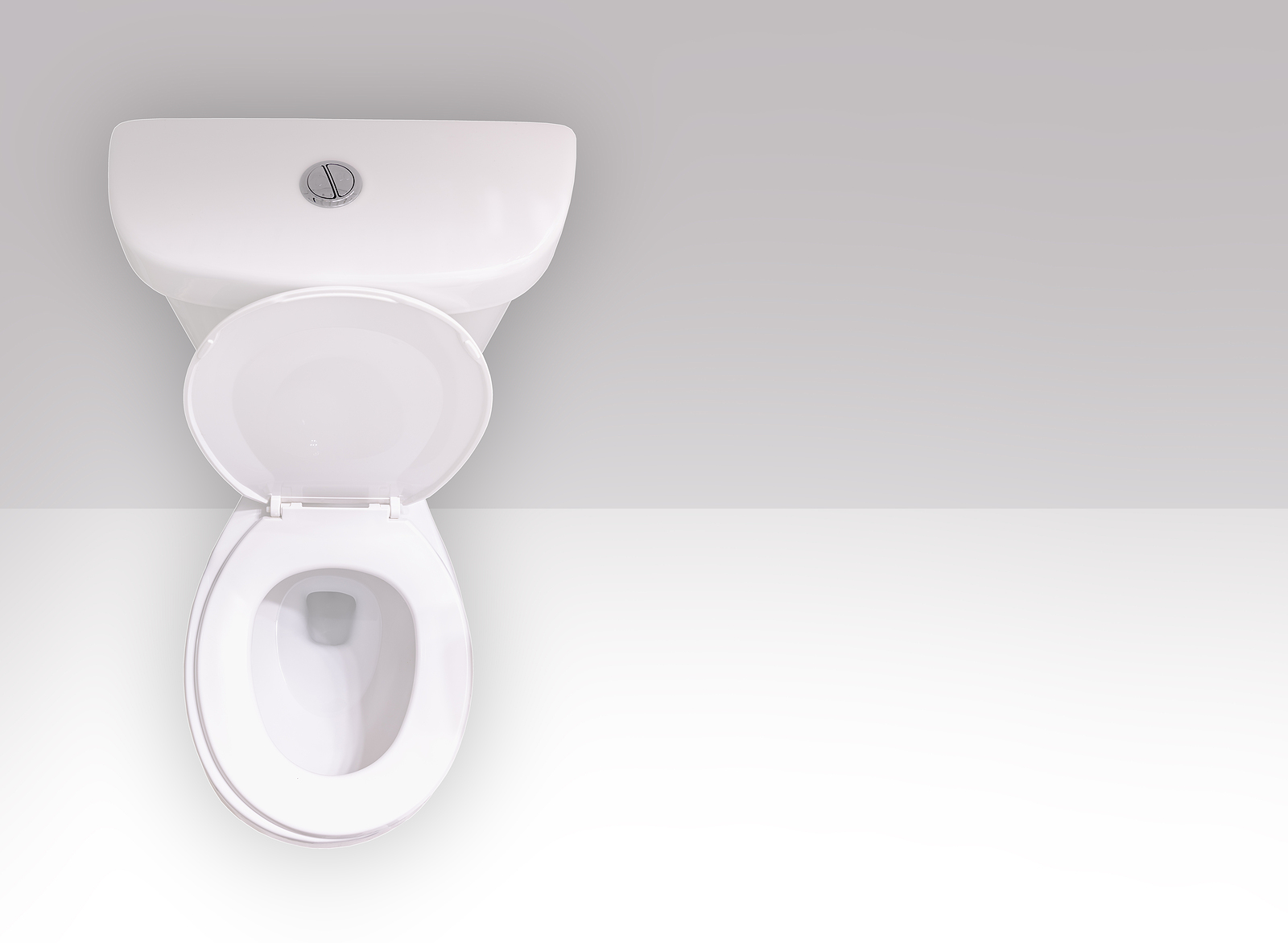
The average toilet lasts about 30 years. If yours is that old and you’re ready to replace it, you’ll notice that the toilet landscape has changed a lot over the decades. Today, you can buy a low-flow gravity toilet, a dual-flush toilet, or a power-flush toilet. Though they all whisk waste away, they’re not all the same. Let’s take a look under the hood.
Gravity Toilets
Gravity toilets are the longtime standard. They use a gravity flush system, a technology used in toilet design for many decades. These toilets create a siphon that draws water and waste into the sewer pipes. This simple design is effective and easy to repair.
But there are two problems:
Sometimes they’re not effective enough. If there’s too much waste, they can get backed up. You need to keep a plunger nearby.
They use a lot of water. “Older, inefficient toilets…use as much as 6 gallons per flush,” says the EPA.
To address copious water use, low-flow gravity toilets are now the standard. They use the same simple technology and a single, lever-style flushing option but are much more water efficient, using between 1.3-1.6 gallons per flush. They can, however, be less effective at clearing waste than other options.
Other energy-efficient toilets are both water-wise and more powerful since they use “water velocity to remove waste instead of water volume.” (Princeton)
Pros of Gravity Toilets
They’re relatively quiet. The swish of a gravity-flush toilet isn’t too disruptive.
More affordable. Due to their simplicity and ubiquitousness, traditional gravity toilets are the most affordable on the market.
Simple to install and repair. Again, gravity toilets are common so it’s easy to find parts and people who know how to fix them. Skirted models (with smooth sides) are slightly trickier to install than exposed trapway models.
Cons of Gravity Toilets
Older models use a lot more water. As noted, old models of gravity toilets can use up to seven gallons of water per flush. However, newer models use much less, closer to 1.6 gallons per flush.
Single flushing option. Traditional toilets have a lever-style flush that only allows one option for flushing, meaning you have no control over how much water you use per flush.
Less effective with heavy waste. If there’s a lot of waste in the bowl, gravity toilets may need to be flushed several times or plunged to clear it.
Dual-Flush Toilets
The dual-flush toilet is a type of gravity toilet invented in 1980. By the mid–’90s, the design was catching on worldwide in areas where water is scarce. It also became more popular as consumers sought ways to preserve the environment and to save money as the cost of water rose.
A dual-flush toilet has two options for flushing. For a full flush (solid waste) it uses 1.6 gallons of water. For a half flush (liquid waste), it uses .8 gallons. Users choose what the situation requires. A larger-diameter trapway (the curved tube that takes waste from the bowl to the sewage system) and a washdown flushing design (which uses a different bowl shape and water action) make a dual-flush toilet use water more efficiently while also preventing clogs.
Pros of Dual-Flush Toilets
They’re relatively quiet. Like a traditional gravity toilet, a dual-flush toilet is not too loud.
Water savings. With two flushing options, a dual-flush toilet’s primary perk is that you can choose to use half the water for liquid waste, saving you water and money.
More effective with heavy loads. A dual-flush toilet has design advantages that help it clear lots of waste more effectively than a traditional gravity toilet.
More affordable than power-flush toilets. A dual-flush toilet is a good option if you want to upgrade from a traditional toilet but a power-flush toilet is not in your budget.
Cons of Dual-Flush Toilets
More expensive than traditional gravity toilets. If you’re watching your budget, a dual-flush toilet will run you more than a traditional one.
Slightly more expensive parts. Parts are easy to find but will run you a little bit more to replace.
Less effective with heavy loads as power-flush toilets. Though less likely to clog than a traditional gravity toilet, a dual-flush toilet will not clear heavy waste as effectively as a power-flush toilet.
Power-Flush Toilets
Power-flush toilets—also called pressure-assisted toilets—use pressurized air to force waste and water down the trapway and into the sewer system instead of pulling it in using the siphoning action of a traditional gravity toilet.
A power-flush toilet has an airtight plastic pressure tank inside the top portion of the toilet. When you flush, the toilet releases both water and pressurized air to create a powerful, high-velocity flush that can reach a peak flow rate of 70 gallons of water per minute.
The power of the flush does three things: it forces water and waste down a standard-sized trapway, breaks up solid waste, and carries waste much further through the drainpipe. These actions together make clogs much less likely. Like low-flow and dual-flush toilets, a single flush uses much less water than traditional gravity toilets, except they’re even more efficient, using just between 1.1 and 1.4 gallons per flush.
Pros of Power-Flush Toilets
Fewer clogs. Because they flush with so much oomph, it’s highly unlikely that you’d need to flush a power-flush toilet a second or third time. And the chances you’ll need to use a plunger, chemicals, or a snake to clear a clog are vanishingly low.
Great for old plumbing. Power-flush toilets work well for buildings with older plumbing systems, including both sewer and septic. Older pipes aren’t as smooth inside as modern piping and can be made of materials such as clay or cast iron. Power-flush toilets can push waste, water, and toilet paper through when a conventional gravity toilet might not be able to.
Water savings. Power-flush toilets use as little as one gallon per flush and typically don’t need to be re-flushed, saving you water and money. They save a typical household 4,000 gallons of water per year.
Fewer cleaning issues. Power-flush toilets are easier to clean because they leave less waste behind (few—or no—skid marks!).
Fewer condensation issues. Your power-flush toilet won’t sweat. Traditional toilets, since they store water in the upper tank, can form condensation on the outside of the porcelain when the temperature of the air outside the tank is warmer than the temperature within.
Fewer leaks. Leaks are rare because water is in a sealed and pressurized tank instead of filling the upper porcelain portion of the toilet.
Cons of Power-Flush Toilets
Higher cost. Power-flush toilets cost quite a bit more than gravity toilets, sometimes up to double the cost.
They’re noisy. Power-flush toilets are much louder than conventional toilets. If you’re used to the flush and gurgle of a gravity toilet, it might seem aggressively loud. They are typically found in commercial, rather than residential, settings.
More difficult to repair. Since power-flush toilets aren’t as common—and use an aging technology—it can be more difficult to find parts and technicians who know how to fix them.
How To Decide What Kind Of Toilet To Buy
There are a lot of toilet options out there. In addition to height, design, and the shape of the seat, you need to decide what kind of flushing system you want in your new toilet.
If your primary concern is water use, Washington State makes it simple, says Tom Redding, our lead plumber. “Washington State is continually upgrading conservation laws as we come up with more efficient ways to get an ample flush and clear waste.” The current maximum number of gallons per flush allowed by law is 1.28 (October 2025). All toilets sold in Washington will not exceed that maximum.
Beyond that, consider the age of your home’s plumbing, your budget, and future maintenance costs.
Sources
Flush Toilet, wikipedia.org. (Accessed October 9, 2025)
How Dual Flush Toilets Work, howstuffworks.com, Sara Elliott, May 2, 2024. (Accessed October 9, 2025)
Pressure-Assisted Toilets: What You Need to Know, absolutefix.com, October 30, 2023. (Accessed September 27, 2025)
Residential Toilets, epa.gov. (Accessed September 27, 2025)
The 6 Best Pressure-Assisted Toilets to Upgrade Your Bathroom, the spruce.com, Jeremy Laukkonen, January 7, 2025. (Accessed September 27, 2025)
Toilets, pcsi.org, Alice Feng, January 20, 2020. (Accessed October 7, 2025)
WAC 51-56-0400, Chapter 4—Plumbing fixtures and fixture fittings, Washington State Legislature (Accessed October 10, 2025)
What are Pressure-assisted Toilets, and Why Should You Install Them?, flushmate.com. (Accessed October 9, 2025)
What Are Pressure-Assisted Toilets? Benefits and Considerations, thespruce.com, Timothy Dale, July 30, 2023. (Accessed October 9, 2025)
Who Invented the Toilet? A Brief History of the Flush, howstuffworks.com, Kathryn Whitbourne and Jesslyn Shields, February 6, 2023. (Accessed September 27, 2025)