

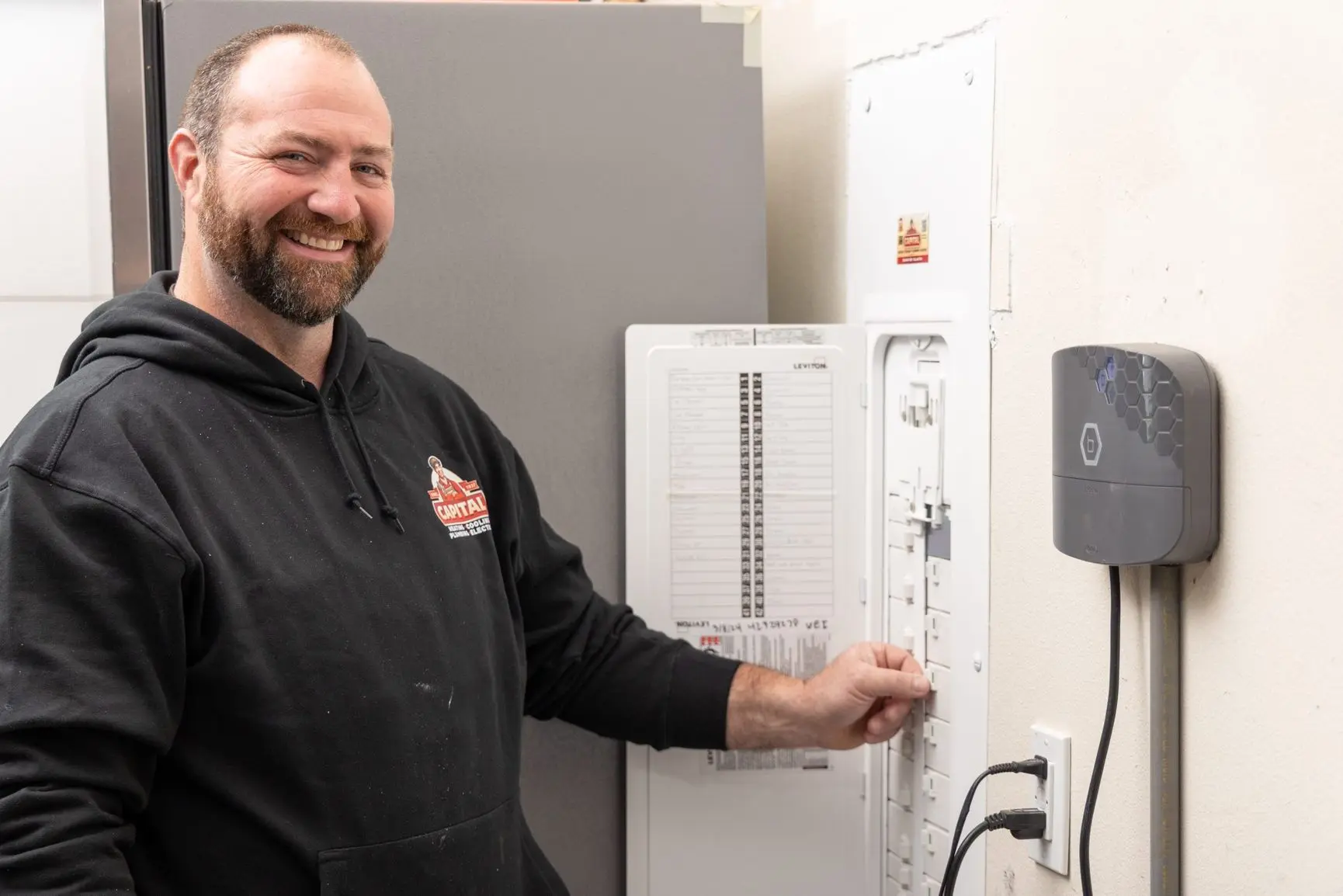
Every home has an electrical panel, also known as a circuit breaker panel or breaker box. A single-family home will typically have one electrical panel through which all of the electricity of the house runs and that shuts off automatically if too much electricity is running through a particular circuit. A home might also have a subpanel or subpanels.
Let’s run through the basics so you know what an electrical panel is, when it needs servicing or replacing, and how to troubleshoot common issues.
What is an electrical panel?
An electrical panel is, typically, a metal box embedded into a wall that contains a front-facing display of switches and a metal door with a simple latch. It’s usually located in an out-of-the-way location, like in a basement or garage, though they can be located in other spaces, too. (One of our customers has a panel hidden discreetly behind a wooden panel in the family room.) According to national code, electrical panels cannot be located in a bathroom, bedroom, clothing closet, pantry, above a staircase, or inside a kitchen cabinet. (angi.com)
A newer home will likely have a 200-amp electrical panel; an older home might have one with 100-amp capacity. Increasing electrical needs for goods such as electric cars or electric heat pumps may require you to install a 400-amp electrical panel.
Electrical panels should be clearly labeled. Next to each switch, be sure there’s a clear label that isn’t specific to your family. A switch labeled “Bethany’s office” won’t make sense to an electrician who doesn’t know you or your home or to future residents. Something like “downstairs bedroom” or “primary bath” is much more clear.
Why do circuits on an electrical panel “trip” or “flip”?
Modern electrical panels replaced fuse boxes. These old boxes contained live fuses and put buildings at risk of sparking or fire when circuit overloads caused them to “blow.” New switches turn the power off before the circuit can overload. They are safe to touch.
When a circuit flips off, all the electricity to the area of the house it services will go dead. To turn it back on, you need to open the panel and find the switch that has flipped to the off position, the one that’s flipped the opposite direction of all the other switches. Flip it back to the on position to restore the power.
Usually, a circuit trips or flips off when too many devices are in use on the same circuit. Once the power is back on, you’ll need to stop using one or more devices or plug something (like a hairdryer) into an outlet on a different circuit.
If you find that circuits are flipping often—and no matter what you unplug it keeps happening—it could be a sign that your electric panel is at capacity and that you’ll need to upgrade.
When should you upgrade your electrical panel? And how much will it cost?
If you purchase an electric vehicle and charger, put in a home addition, or upgrade an electric appliance, your current 100- or 200-amp panel might not be able to handle a big enough load for your electrical needs.
To put in a new, bigger panel, the cost usually runs between $3000–$5000. Be sure to take this cost into consideration before you make any major electrical purchases.
You might also need to upgrade if your electrician tells you that your current panel doesn’t have any more room for additional circuits. Keeping your electrical panel current is an infrequent but necessary cost of home ownership that you should budget for. Panels last 20 to 30 years—or longer if they’re maintained well and if your electrical needs don’t outgrow your current panel.
Should you do your own repairs on your electrical panel? Or replace it yourself?
No. Do not replace or repair an electrical panel as a DIY project. Hire a licensed electrician and make sure the work is permitted.
Electricians are trained to work with electricity safely. If you attempt to do this work yourself and you are not a licensed electrician, you might do the work incorrectly, which could put your home in danger of fire.
What are the signs that your electrical panel is damaged or outdated?
A regular circuit keeps tripping. If your electricity keeps shutting off and you find yourself trudging out to the garage over and over again to flip it back on, it probably means the circuit is overloaded. If unplugging and moving high-powered devices to a different circuit doesn’t help, you might need to add more amps to be able to handle your electricity use.
A GFCI (ground fault circuit interrupter) circuit keeps tripping. These special breakers might mean that you have a ground fault because of bad wiring or a damaged appliance. Hire a licensed electrician to find out what’s going on.
There’s a bad smell coming from the panel. The smell of burnt plastic or rubber can indicate issues with your electrical system. A metallic smell could indicate electrical arcing, which is dangerous, too. Bring out a licensed electrician right away to address the issue. The smell of sulphur or rotten eggs, on the other hand, could mean a gas leak. Turn off your main breaker at the top of the panel to shut off electricity to your entire house and call your natural gas company.
You hear a buzzing or humming sound. If your electrical panel is buzzing, it could mean an overloaded circuit, loose wiring, or a switch that isn’t flipping as it should. It could also mean an arc fault, a serious problem that could lead to a fire. Have a licensed electrician out to diagnose and address any of these problems.
A circuit breaker feels warm or hot to the touch. A circuit breaker should trip if it starts to overheat. If it doesn’t, and just feels hot to the touch, it could be a sign of a serious problem. Have a licensed electrician out immediately.
You still have a fuse box. Fuse boxes are outdated and unsafe. if you have one, it’s time to get bids for a new electrical panel and have it replaced as soon as possible.
Sources
All About Home Electrical Panels, New York State Energy Research and Development Authority (accessed February 26, 2026)
Distribution board, Wikipedia (accessed February 26, 2026)
Electrical panels, Square One, November 11, 2013 (updated September 18, 2025; accessed February 26, 2026)
How Electrical Panels Work, Sense (accessed February 26, 2026)
Inside Your Home’s Electrical Service Panel, thisoldhouse.com, Kristin Luna, September 14, 2024 (accessed February 26, 2026)
Is It Okay to Have an Electrical Panel in a Bathroom? What You Need to Know, angi.com, Lawrence Bonk, October 28, 2025 (accessed February 26, 2026)
Should I Upgrade My Electrical Panel?, angi.com, Kat Brancato, April 4, 2025 (accessed February 26, 2026)
The Causes of Electrical Panel Bad Smells, dawsonselectric.com (accessed February 26, 2026)
Why Is My Circuit Breaker Buzzing? A Guide, isaacheating.com (accessed February 26, 2026)
Our Expert
Scott Terry is the lead electrician for Capital Heating, Cooling, Plumbing & Electric. He has more than 25 years of experience in the industry.
Our Company
Capital Heating, Cooling, Plumbing & Electric has been serving the South Sound in Washington state for three generations. Our highly trained technicians deliver top-notch service and the latest in home systems innovations.