

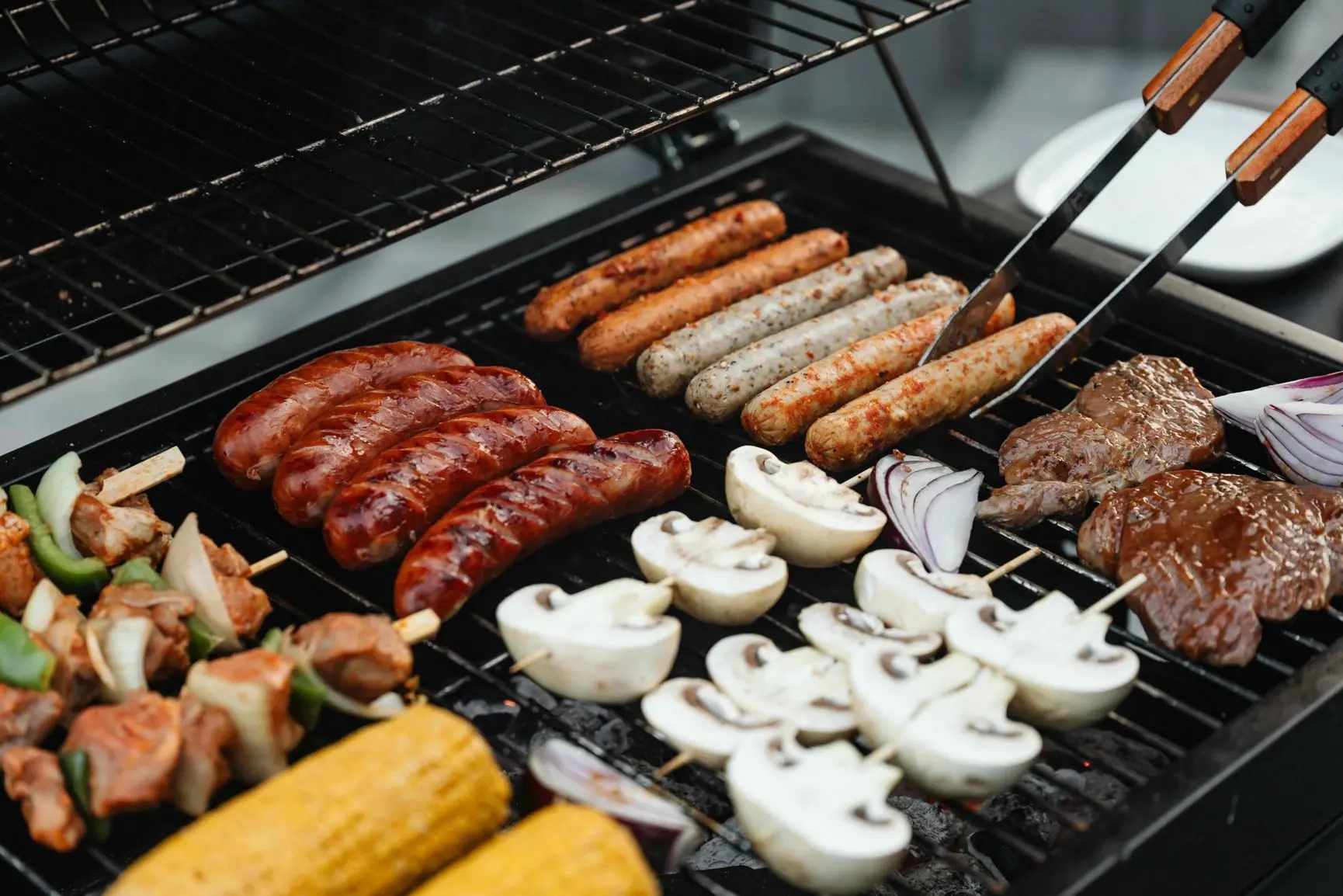
Running a gas line to your natural gas grill makes outdoor cooking and entertaining much simpler: No need to swap out tanks anymore or worry that you’ll run out of fuel mid-burger. If your home isn’t already plumbed with a natural gas line to an area where you can hook up your gas grill, you’ll need to hire a plumber to install one.
Before you do, let’s take a look at the cost of natural gas vs. propane, the benefits and drawbacks of each, and what it takes to install a new gas line, convert your grill hookups, and safely cook outdoors.
Comparing the costs of natural gas and propane
One to one, propane is less expensive than natural gas. Propane runs between $2.00 and $2.50 per gallon while natural gas is $1.40 to 2.10 per therm (homeguide.com). But since these fuels are measured differently, they’re hard to compare.
A better guide is BTUs or British Thermal Units; according to BTU measurements, “[p]ropane can provide twice as much heat energy as natural gas…one cubic foot of natural gas produces 1,030 BTUs, whereas the same amount of propane will provide 2,516 BTUs,” (angi.com).
Deciding between propane and natural gas for your BBQ
Convenience. This is the big difference between a natural gas and a propane grill. A natural gas line gives you continual access to fuel for your grill—a set-it-and-forget-it option. Propane tanks need to be switched out and stored. And you need to plan ahead if you’re having, say, an all-day outdoor party.
Environmental impact. Natural gas is a fossil fuel composed mainly of methane, a greenhouse gas that releases carbon dioxide into the air. Propane is usually a byproduct of natural gas but emits less carbon dioxide. There’s also a form of propane that’s derived from agricultural waste, a more environmentally friendly option.
Safety. Both options, when used properly and maintained well, are safe. Note that propane is highly flammable and heavier than air, so it can collect if there’s a leak and become dangerous. Natural gas is lighter than air and dissipates more quickly.
Getting a new natural gas line installed for your BBQ
If you opt to install a new natural gas line for your outdoor grill, you’ll need to hire a plumber to do it. This is not a DIY project.
There are certain things you can do to prepare, like checking your meter capacity and calculating how much gas you’re using in your home currently. Add up the BTU rating of each of your natural gas appliances and compare the total with your meter’s BTU capacity. This will show you whether or not you have enough room to add a line to your grill
Once your plumber arrives, they will plan, install, and test your new gas line. While they’re installing the new line they will need to turn off the natural gas, which means you won’t be able to use your natural gas appliances, like stoves, furnaces, or dryers, while the line is getting installed.
Once the line is installed, your plumber will show you how to attach your grill to the gas line safely.
Converting your BBQ from propane to natural gas
If you already have a grill that runs on propane, you’ll need to convert the orifices of the burners to natural gas. The manufacturer of your grill will likely sell conversion kits.
Stay safe when you’re cooking outdoors
While you’re using your natural gas grill, follow the Washington State Patrol grilling guidelines, including:
- Check for up-to-date burn bans or restrictions.
- Keep grills ten feet from structures and overhanging branches, and flammable materials.
- Check the gas cylinder hose for leaks at the start of each season by spraying a soap-and-water solution and turning on the gas. If the solution forms bubbles, it indicates a gas leak. Don’t use the grill until you’ve called in a professional to fix it.
- Open your grill before lightning it.
- If you smell sulphur or rotten eggs, this indicates a gas leak. Immediately cut off the gas, get away from the grill, and call 911.
Sources
How To Install a Natural Gas Barbecue Grill, thisoldhouse.com, Richard Trethewey, September 4, 2024 (accessed February 26, 2026)
Is it cheaper to heat with propane or natural gas? homeguide.com, Tamatha Hazen, March 29, 2024 (accessed February 27, 2026)
Outdoor Grilling Safety, wsp.wa.gov, June 19, 2023 (accessed February 27, 2026)
Propane vs. Natural Gas: What’s the Difference?, angi.com, Derek Rose, February 19, 2026 (accessed February 27, 2026)
Our Expert
Tom Redding reviewed and approved this post. He is the lead plumber for Capital Heating, Cooling, Plumbing & Electric and has more than 30 years of experience in the pipe trades. In addition to repairs, he designs and installs complex plumbing and mechanical systems.
Our Company
Capital Heating, Cooling, Plumbing & Electric has been serving the South Sound in Washington state for three generations. Our highly trained technicians deliver top-notch service and the latest in home systems innovations.