

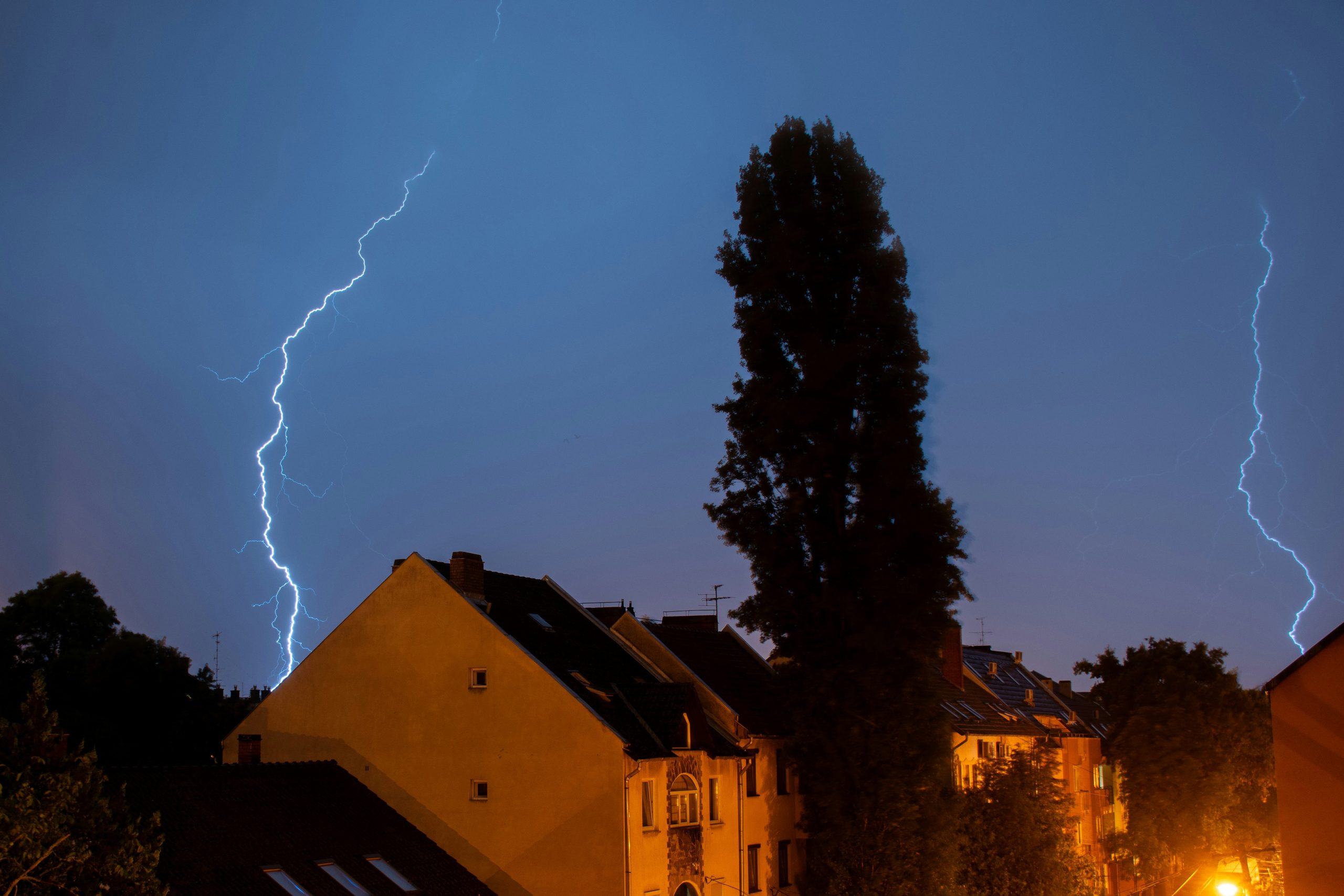
Lightning and thunderstorms are rare in the Pacific Northwest. On the one hand, this means we can be less worried about it. On the other, it means we’re less prepared when a storm does roll in.
Here’s what you need to know for the next time a freak lightning storm pops up, including home electrical and plumbing safety tips to keep you and yours safe.
What causes lightning and thunderstorms?
Thunderstorms require three elements: humidity, rapidly rising air, and motion in the atmosphere. We don’t typically get these kinds of storms in our region because our cool air holds less moisture. Our region also has high-pressure systems off the coast that keep thunderstorms from developing.
According to Washington State University, when we do get lightning and thunder, it’s likely “the result of warm, moist and unstable air flowing from the south.”
That doesn’t mean it never happens, though. Here’s what to do the next time you hear thunder rolling.
What should you do if there’s lightning and thunder?
Even though we don’t experience them too often, we should all know what to do when a lightning storm is on the way. When you hear thunder, seek shelter inside. The National Weather Service reminds us: When thunder roars, go indoors.
They also remind us that “if you can hear thunder, you are close enough to be struck by lightning.” That’s advice that many of us in the Northwest aren’t familiar with. It might seem fun to sit out on the porch and watch the lightning strikes but the safest place to be is inside. If you can’t get inside a building right away, seek shelter inside a hard-topped vehicle with the windows rolled up. As you’re seeking shelter, be aware that lightning can strike even where no rain is falling.
No area outside is truly safe but you can reduce your chances of being struck by lightning by not sheltering beneath a tree or partially enclosed structure, such as a gazebo or carport. Stay inside until 30 minutes after you have been able to hear thunder.
What should you do next? While you’re waiting out the storm inside, follow these home electrical and plumbing safety tips.
Unplug Electronic Equipment
Before and during a storm, it’s important to unplug any sensitive electronic equipment, such as desktop computers, laptops, tablets, phones, game systems, and televisions. This isn’t the time to charge your phone.
According to HowStuffWorks, “That surge of electricity can overload the capacity that most homes are equipped to deal with, either burning the conductor of your electrical equipment or causing a short circuit.” The average surge protectors can help but a big electrical surge can break through the average surge protector. It’s best to unplug all of your equipment when a really big storm is coming.
Scott Terry, our head electrician, says you can also consider whole-house surge protection, a solution that is designed for just this kind of situation. “The average cost is less than a new TV,” he says. “Keep in mind, though, that surge protection does not work on ungrounded houses or ungrounded outlets. Make sure your grounding standards are updated for today’s electronic realities.”
Even though lightning storms are rare in this area, preparing for one with more robust surge protection can also help you prepare for other kinds of freak power outages, such as a utility pole struck by a reckless driver or downed in an ice or wind storm.
Stay Away From All Electronic Equipment
If you still have a corded telephone, don’t use it during a storm. Ditto for a plugged-in laptop or other electronic device. (It is safe, however, to use a cell phone or other charged-up device that’s not plugged in.)
The Centers for Disease Control, in fact, says not to touch any equipment that’s plugged in, including washers, dryers, air conditioning units, stoves, vacuums, small appliances—anything that’s connected to an outlet. That’s because lightning can travel through electrical systems. Wait until the storm has passed (for at least 30 minutes) until you use or plug in any of these items.
Don’t Use The Plumbing
Plumbing and plumbing fixtures can also conduct electricity. Any activity that uses water is on the list of don’ts during a lightning storm.
“Your home electrical system is grounded to the earth, so it could electrify your plumbing,” says our lead plumber, Tom Redding. “Your water system is usually bonded to the electrical system. It’s a great path to the earth. So don’t touch your plumbing whatsoever during an active lightning storm.”
Don’t take a shower or bath, wash dishes, or do laundry. (You also shouldn’t go swimming since water is an excellent conductor of electricity.) Instead of doing chores, grab a book or a deck of cards and wait out the storm.
Don’t Touch Metal Objects (But Not For The Reason You Think)
Tall, pointy objects attract lightning. Metal does not. You don’t need to worry about freestanding items attracting lightning to your home, like bikes or patio furniture. Instead of moving metal objects before or during a storm, get yourself to safety.
Metal does, however, conduct electricity so you should avoid touching metal structures outside that are attached to the earth. The National Weather Service says that “[w]hile metal does not attract lightning, it does conduct it so stay away from metal fences, railing[s], bleachers, etc.”
15 Things You Should Never Do During a Thunderstorm, Jennifer Noonan and Margaret Foley, bobvila.com, Aug 28, 2023. (Accessed September 4, 2025.)
Lightning Myths, National Weather Service. (Accessed September 4, 2025.)
Safety Guidelines: Lightning, Centers for Disease Control, April 15, 2024. (Accessed September 4, 2025.)
Should you unplug your electronics during a thunderstorm?, Kate Kershner, HowStuffWorks, April 16, 2024. (Accessed September 4, 2025.)
Thunderstorm and Lightning Safety Tips, Massachusetts Emergency Management Agency. (Accessed September 4, 2025.)
Understanding Lightning: Thunderstorm Development, National Weather Service. (Accessed September 4, 2025.)
Why thunderstorms are rare in the Pacific Northwest, Nic Loyd and Linda Weiford, WSU News, May 19, 2016. (Accessed September 4, 2025.)