

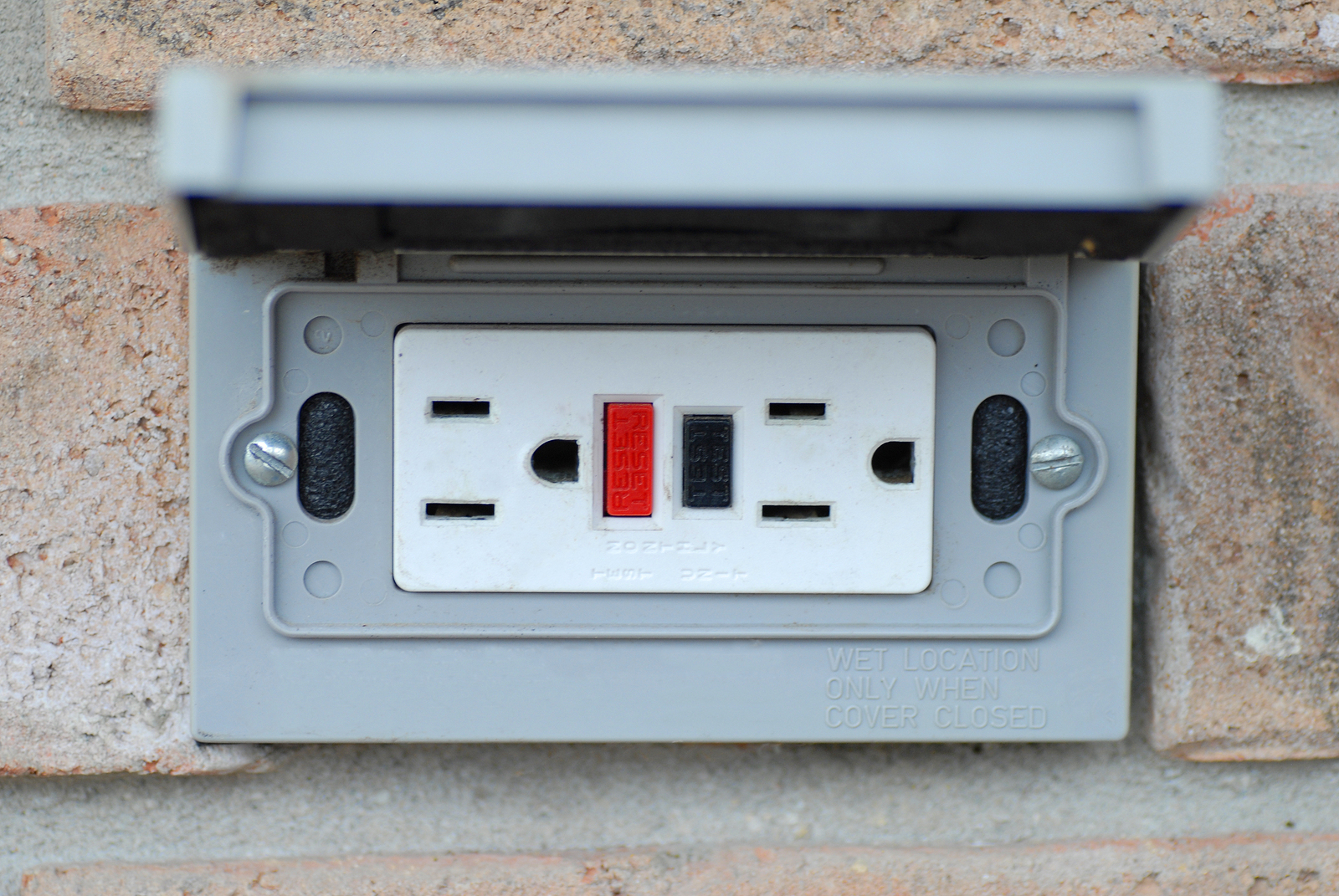
You’ve seen electrical outlets with “test” and “reset” buttons in your home. These are GFCI outlets, designed to keep people from getting shocked or electrocuted. GFCI stands for Ground Fault Circuit Interrupter.
How Do GFCI Outlets Work?
According to SafeElectricity.org, “If a person’s body starts to receive a shock, the GFCI senses this and instantly cuts off the power, stopping the flow of electricity, before [a person] can get injured.” (Emphasis ours.)
Put another way, a GFCI outlet is, essentially, a very fast-acting circuit breaker that constantly monitors the electrical current flowing through a circuit and is equipped to interrupt it within 1/40 of a second. This is called preventing a ground fault, defined by the Consumer Product Safety Commission as “an unintentional electrical path between a power source and a grounded surface.”
Where Do You Need GFCI Outlets?
GFCI outlets are required in areas near water, such as bathrooms, kitchens, garages, and outdoor areas. Water conducts electricity so the combination of electricity to these areas pose a higher risk for injury.
Maintenance
To make sure your GFCIs are working, press the test button once a month and then press the reset button. If the reset button stays set, your outlet is still good. If the reset button won’t stay pressed down, it may be faulty.
If the outlet stops working periodically (sometimes called a “ghost trip”), just reset it. If it continues to turn off, it may need to be replaced.
Sources:
All You Need to Know About GFCI Outlets, bobvila.com
CPSC Fact Sheet: What Is A GFCI?, cpsc.gov
GFCI Defined, guardiangfci.com
Ground Fault Circuit Interrupters (GFCIs), safeelectricity.org