

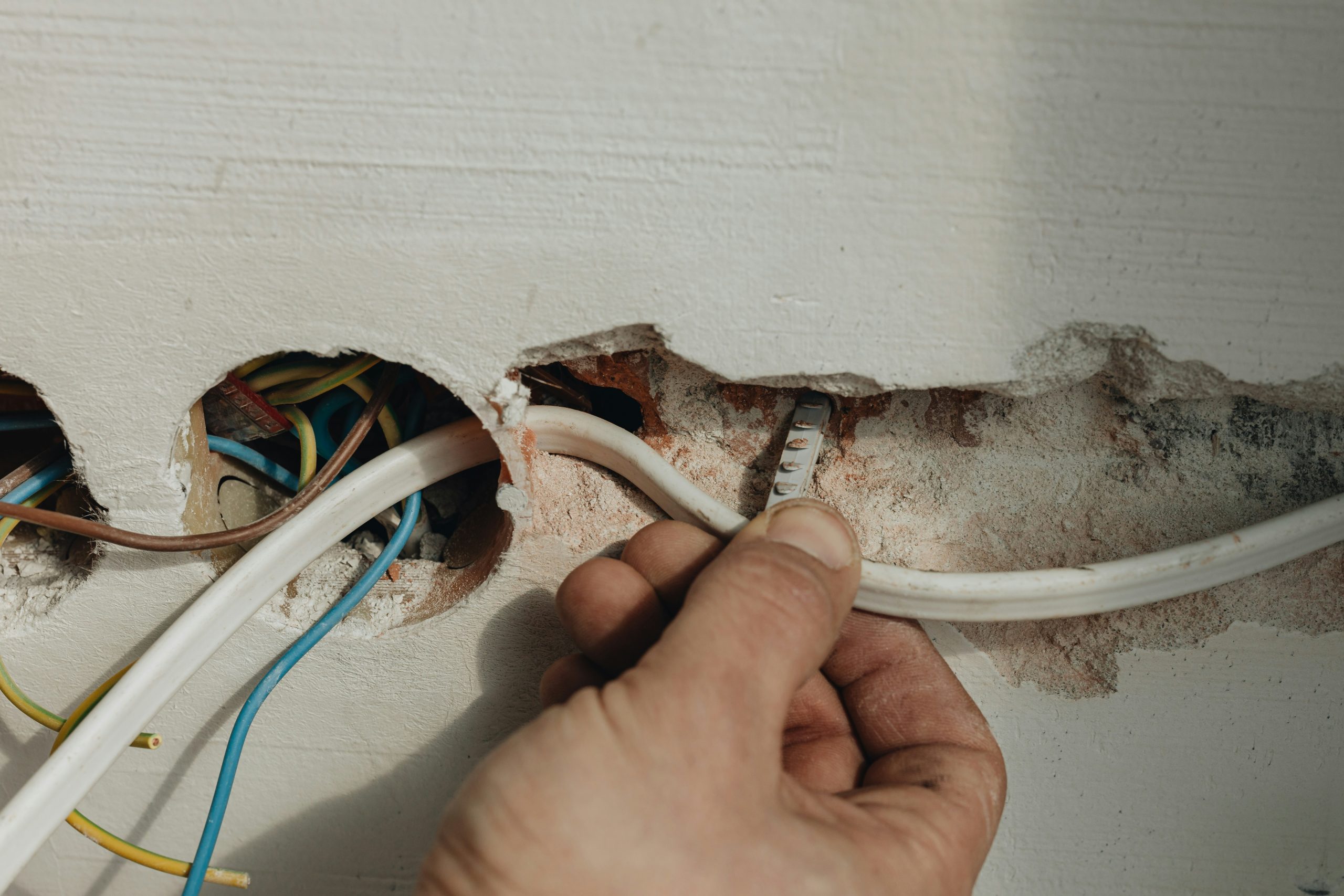
As an everyday homeowner, you probably don’t think about the wiring in your home very often, if at all. And that’s usually fine. When electrical wiring is working well, you won’t — and shouldn’t — notice it.
Still, it’s good to be aware of potential problems, especially if you don’t know who installed your home’s electrical wiring.
Capital’s head electrician, Scott Terry, says you can keep an eye out for these four important indicators that there could be some bad wiring in your home.
Lights Are Blinking, Flickering, Or Buzzing
If a light fixture is making mayhem instead of steadily lighting your space, it may be time to have an electrician check out the wiring. A light may dim when you turn on another light or appliance, make a buzzing noise when it’s on, or flicker and blink. If you notice any of these behaviors with the lights in your home, have a professional out to look at the wiring.
Small Appliances Seem To Have A Mind Of Their Own
The alarm clock that resets itself at random every so often. An on-again, off-again pencil sharpener. If you haven’t had a power outage but one or more of your small appliances aren’t functioning properly, it could be the wiring.
Sagging Plugs
Do you have any loose outlets in your home that won’t hold a plug? In the business, these are called retention-poor outlets and they need to be replaced by a professional. It’s common for people to try and hack the problem by prying the prongs on the plug apart so it will stay in the outlet. Don’t do that. The sagging indicates that the wiring inside is loose. If it’s not fixed, increased heat can cause the wiring to melt, which can become a fire hazard.
Circuit Breakers Keep Tripping
If you keep having to trudge out to the garage to flip the same circuit breaker, you might need to have someone look at your wiring. If the breakers are flipping, say, several times a month, first try to isolate the problem. Are you running too many high-demand appliances on one circuit? If so, moving the devices in question or staggering their use might help. If not, an electrician can tell you if the problem is more significant.
What Else Can You Do?
In addition to keeping an eye out for these potential problems, Scott Terry says to proactively check the outlets where you plug in devices or appliances that draw a lot of wattage or produce a lot of heat. Make sure those outlets are up to code and in good working condition.
Here’s a sample list of high-wattage or heat-producing home devices. Pay close attention to outlets where you plug in a:
- Microwave
- Vacuum
- Hair dryer
- Curling iron
- Space heater
- Iron or steam iron
- Air fryer
- Electric kettle
- Freestanding induction burner
- Electric griddle
Finally, be careful with any DIY home wiring projects. When problems arise, like warm-to-the-touch outlet covers or wires sparking, it’s common for our electricians to find wiring done by an amateur. If you don’t have experience or training, don’t do your home wiring yourself. Call in a pro.